Monday, January 5, 2015

Birding Lists and Journals

Being a frequent visitor to Cape May, it is high time to start keeping track of all the birds I see. Where to start?  I bought a ABA Area Trip List at the Cape May Bird Observatory to first record all the birds I have ever seen. 


I would like a more permanent journal, but this is a start.  My list includes a rather meager number of only 130 species.

The 7.7 downloadable version for September 2014 of the ABA Birding Checklist can be found at this site and includes 987 species:  http://listing.aba.org/aba-checklist/

My goal is to increase my knowledge by participating in more birding classes in PA and NJ. I bought a Rite in the Rain All Weather Birder's Journal with a corresponding pen to use during these walks and classes and to keep track of what I see. 

I like what these blogs suggest for keeping a birding journal, such as:

a. Include the species name, habitat, weather, date, appearance, behavior, vocalizations, and flock size. 
b. Include a quick sketch. 
c. Note the color and size of the beak, the eyes, legs and feet.



The folks at 10,000 Birds Blog have an excellent post about why to keep birding lists: http://10000birds.com/birdlist.  I like how they have a digital running list for their life list and yearly list.

My goal is to at least double my number by the end of the year and keep a yearly list. I want to focus on shorebirds, gulls, warblers and sparrows. 


Sunday, December 7, 2014

Earliest Sunset NOT on Winter Solstice!


I often like to catch the sunset and when I checked on my blog site for the sunset time, which is located on the right column below, I noticed that the sunset time 
was the same for several days in a row:


How could that be? What about solstice? Wouldn't the earliest sunsets be on solstice?
After some research, NO it is not for this part of the hemisphere! The earliest sunsets are happening NOW and not just for one day but for days, as displayed above. 

Winter solstice is on December 21st this year and the reason the earliest sunsets and solstice don't coincide is due to the discrepancy between the clock and sun. It has to do with the solar noon measurement, which is a half minute longer in December. 
See this site for further information: 

Make note though, that the shortest day still is on solstice since sunrise is later!

The upside is we can start enjoying later sunsets sooner, starting December 16th!


Wednesday, July 9, 2014

Progression of a Sunset

It was sunset time and time to celebrate the end of a great day!


After watching for a short while, it looked like it was finishing up quickly.

Later, the sky was glowing and begged for another visit. 

Racing over the dune and down to the beach, this was the view to behold. . .


 It slowly melted away.


Tuesday, June 3, 2014

A Windy Adventure in Cumberland County

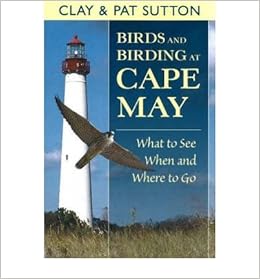
Clay and Pat Sutton's "Birds and Birding at Cape May" is an excellent go to book for scouting out a fun outing. It provides detailed information about where and what can been seen and is organized by the seasons in Part 1.

With time for an adventure in late April, I turn to the Spring section, and see that Horseshoe season is just starting, with Red Knots and other shorebirds on the way and that the Delaware Bayshore is a great place for sightings. I page to the Site Guide section, and determine that Cumberland County, including Thompson's Beach, East Point and Heislerville WMA, is where we should head.
On the way, we spot an osprey nest, with one eating a fish on a limb, while the mate tends to the nest.


At East Point, with cold weather and a stiff wind, void of both birds and people, 


a quaint old Lighthouse, built in 1849, is there to greet us. 


Out from the grasses, flies a Red-winged Blackbird with his bright red epaulet showing, 


down along the rocky shore, are a few Willets nibbling 


and winging in and out of the wind.


Back off the shore in the grasses, 


three Glossy Ibises swirl down and find a quiet place to rest. 


Our trip continues on to Heislerville. where we discover with delight an island 
covered with nesting Snowy Egrets and Cormorants.


The almost 7000 acre Heislerville WMA has a series of impoundments that you can drive on - it is a little crazy as they are only wide enough for one car.


Unfortunately, the winds scare off most of the birds and there are only a few Willets lingering. According to Sutton, this is a great place for a variety of shorebirds, waterfowl and raptors. If you are lucky, you might see 100s or even 1000s in a day.


On the way out, we park in the wooded area, where the paths have recently been reshelled, making it too noisy to see any birds, although the habitat is rich and lush.


 These are great birding sites that we look forward to revisiting.


Friday, May 30, 2014

'A Little Robin's Nest'

Our neighbor, John Safrit, 
was highlighted at Meet the Artists Reception at Splash in Cape May on April 26th, 
(Invitation)
highlighting his stunning nest collection:


The reception was a lot of fun and there were many beautiful paintings and art to be seen.

I was very fortunate to receive his painting, Little Robin's Nest as a wonderful gift for Mother's Day!

I enjoy seeing it each time I come in the door.

The colors, the composition and depth are amazing. 

Check out his facebook page: https://www.facebook.com/ArtStudioofJohnSafrit

Splash is a beautiful store, check them out on Facebook: https://www.facebook.com/SplashCapeMay

Monday, April 21, 2014

Hunting for Eggs at Easter!

Cape May Point hosts yearly a very festive 
Easter Egg Hunt 
with their very own stunning blue fire trucks,


 including rides,

loads of colorful eggs and excited children and families,


shy pups and even dressed up ones,

 (here is our little Lilli from last year)


 and amazing prizes.


(Note: These photos are from this and last year's hunt!)

Monday, March 10, 2014

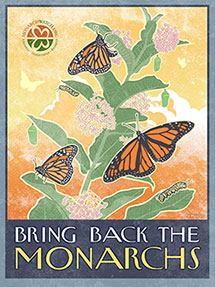
Monarchs in Crisis! Act NOW!

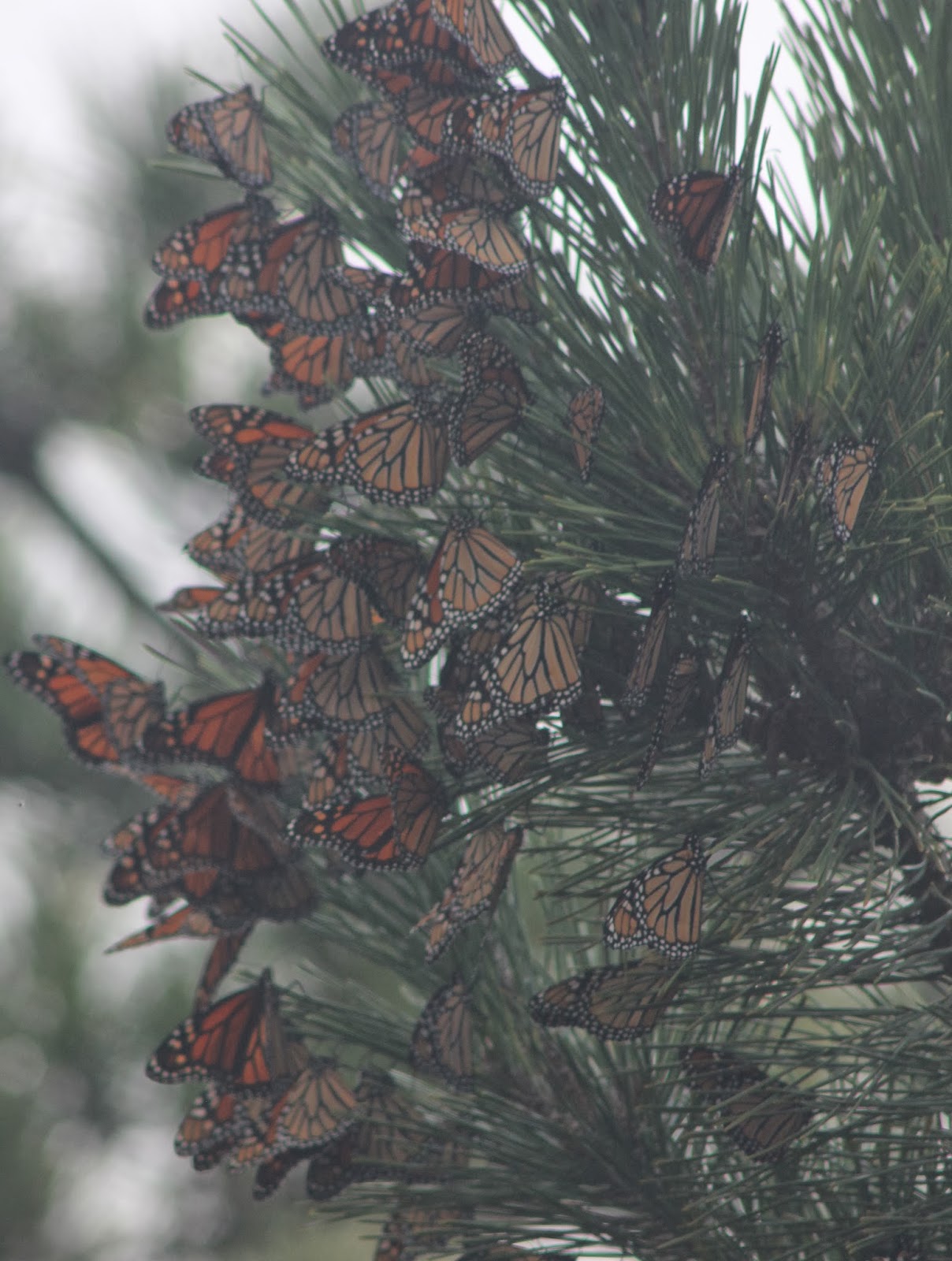
This past Fall 2013, I was stunned to see the drop off of monarchs passing through Cape May on their migration to Mexico. The year before, they were abundant, as you can see in these photos from September 15 in my back yard on Ocean Avenue, as they fed on nectar from English ivy:


and on cool, foggy September 29, down by the beach on Ocean Avenue, as they prepared to cross the Delaware Bay:


For more photos and story, please refer to blog entry from March 24, 2013, Fall Reflections: Monarch Migration Snapshot.

I don't even have a photo from this past fall of 2013, as I kept waiting and they never really came. Just one here and then a couple there would flutter by.

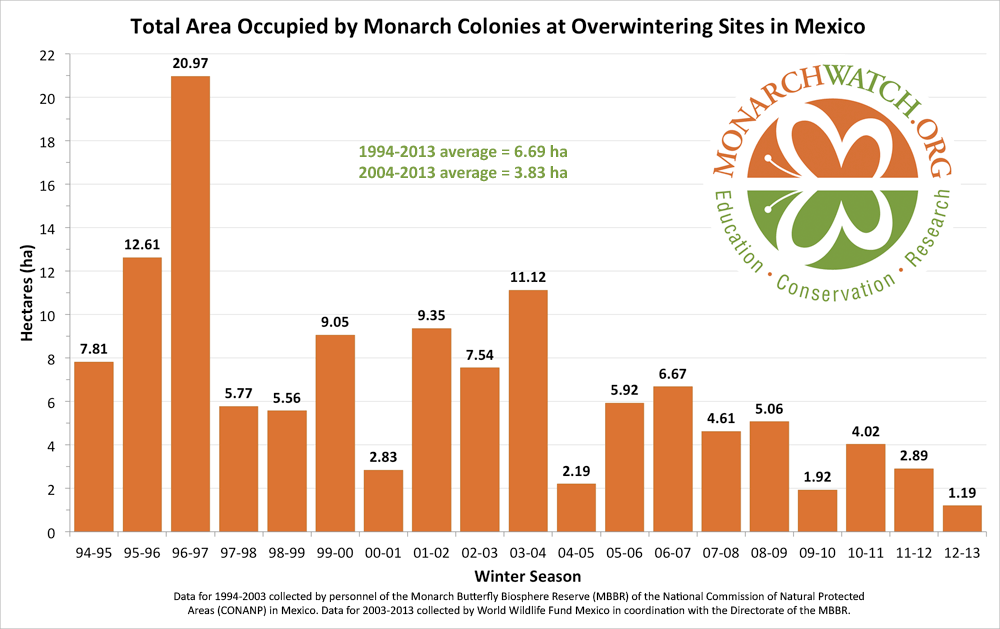
Their population has been in a steady decline for the last 2 decades and has reached a CRISIS situation with more than 90% of the population in decline.


For a detailed report, please see Monarch Watch's Population Status report from January 29, 2014: http://monarchwatch.org/blog/2014/01/monarch-population-status-20/

and for further info, see: http://www.learner.org/jnorth/tm/monarch/population_mexico_graph.html.

This drastic decline in population can be attributed to the following factors:

1. Habitat loss along their migratory routes as well as in Mexico
2. Use of herbicides on large scale farms, killing their main larval host plant, native Milkweed
3. Use of pesticides
4. Severe drought in the west
5. Climate change

YOU CAN HELP!

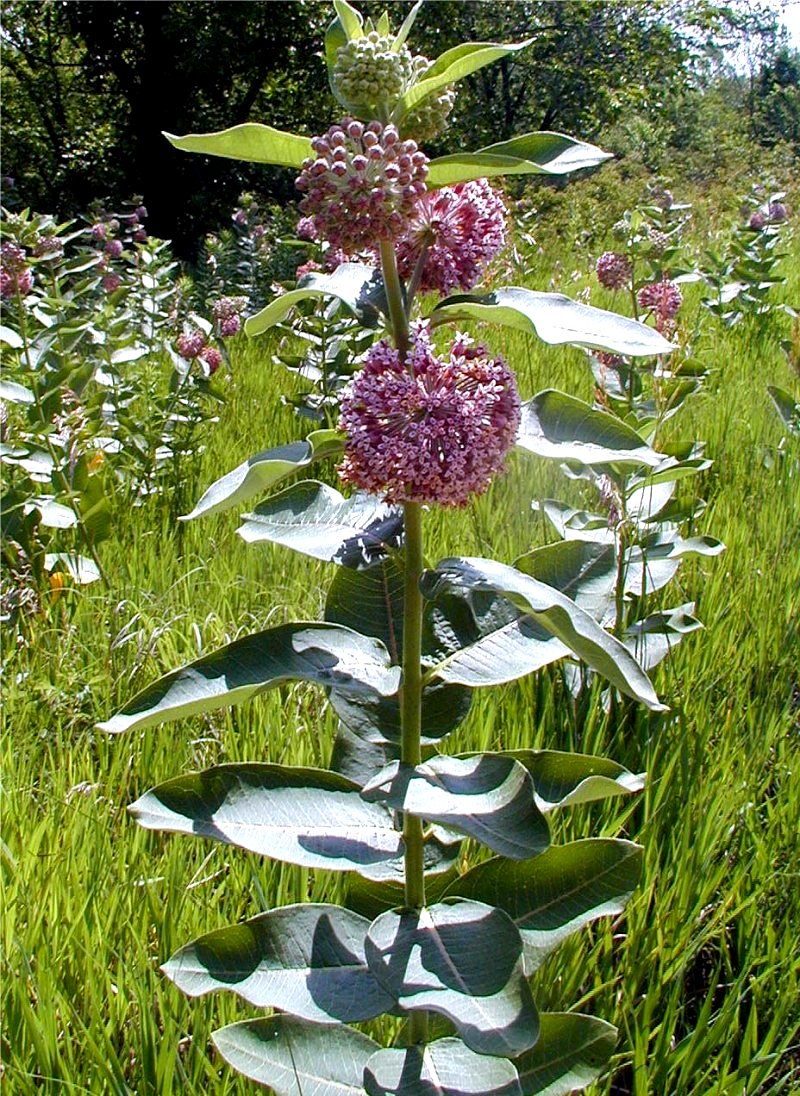
a. Plant milkweed. Seeds are available FREE at this site: https://www.livemonarch.com/free-milkweed-seeds.htm or go to your local nursery. The variety that grows best in the NE is Asclepias syriaca and looks like this:

b. Plant native plants and flowers for them to feed upon. See this site for suggestions: http://www.monarchwatch.org/garden/nectar.htm

c. Avoid pesticides and herbicides, using them only when necessary and be sure to follow the labeled instructions.

d. Buy sustainable, organic, and GMO free products

e. Spread the word

To inform yourself further, see Monarch Watch: http://www.monarchwatch.org/