Thursday, February 18, 2016

Windy Winter Visit to Forsythe NWR

The weekend of January 30th was a productive and exciting birding weekend. Traveling up to Forsyth, using the new and improved exit 41 from the Garden State Parkway, with windy, cold, but sunny weather, we saw many birds, including:

Black Duck - 100+

Snow Goose - 400+


Northern Pintail - 50+

Black Scoter - 30+

Bufflehead - 2 pairs

Hooded Meganser -  4 pairs


American Wigeon - 10 Pairs

To top off the slow exit from the park, perched on an osprey nest, was a proud juvenile Bald Eagle.


The photos are poor overall, due to the windy conditions, but I wanted to document some firsts for me including the Buffleheads, Hooded Megansers, the Immature Bald Eagle and the American Wigeons.

The following day, with temperatures in the mid 50s and sunny, driving past Lake Lilly in Cape May Point, we saw flying overhead a stunning mature Bald Eagle. Over at the state park, there were numerous Yellow-rumped Warblers,


Gadwals, Black ducks, Mallards, and a Mockingbird.

Off the dune trail, a pair of Northern shovelers were oblivious to our presence as they did a mating dance/ swim.


The pair circled and circled, barely coming up for air, creating large round ripples, as seen above.

Sunday, February 7, 2016

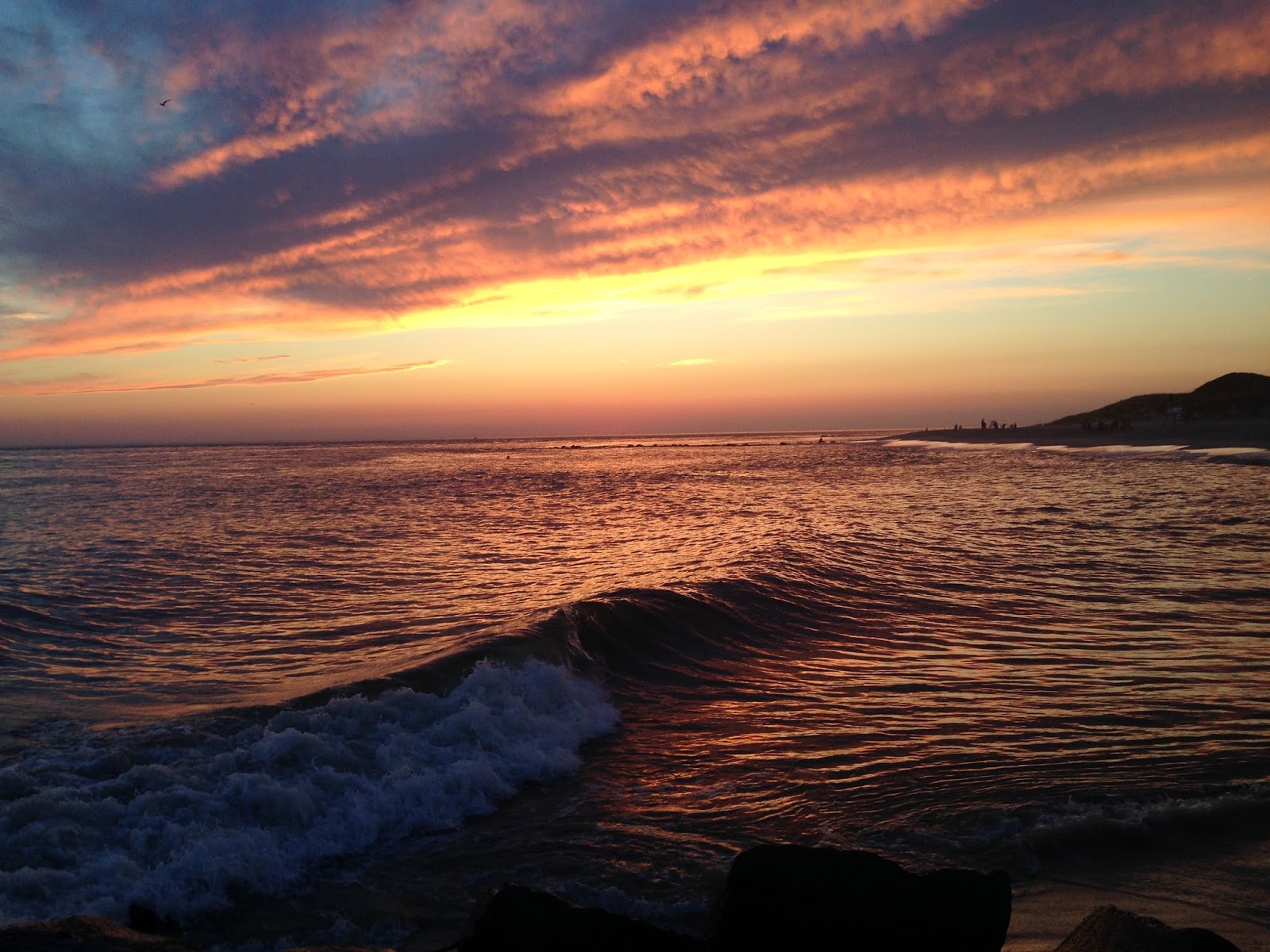
Winter Sunset

 This sunset, from a week ago, started out very subdued, 
 we waited for more . . .
then it grew in intensity, casting light onto the surrounding clouds,

 then reached it's peak 
 and slowly dissipated 
and the light disappeared into night.

Truly awe-inspiring! 

Tuesday, January 12, 2016

Friday, January 8, 2016

Captured moments through the seasons

2 bluebirds from a flock of 50+


cape may view on a chilly early spring day


mute swans in formation


green horseshoe crab eggs 


spring flowers


 dog walker


black bellied plover antics


dramatic sunset


 summer end's noisy cicada 


monarch population rebounds


autumn seeds


sunset silhoutte


  evening sky canvas


glorious camellia flowers


Saturday, April 11, 2015

The Point's Owlet!

Great Horned Owls start nesting in January and February and lay 2 to 4 dull white eggs in a borrowed nest of another raptor, such as a hawk or crow. Incubation lasts between 26 and 35 days, done by the mother, while the male feeds her and then the owlets for a couple of weeks after they have hatched. After the babies have their second set of down feathers, the male and female hunt and feed the babies together for up to 3 months, while the owlets grow very quickly and eat ravenously. They stay together as a loosely knit family through the summer, until autumn, when the juveniles disperse. The mated pair will remain in the same territory up to 8 years.

Here at the Point, a Great Horned Owl with nest and babies was reported over near Lake Lilly.  On the way, I spotted 2 birders and they led me to the special vantage point to get a glimpse. I came back in late afternoon, when the lighting was better, to take these photos:


I was surprised by the small nest size. Apparently, there had been 2 owlets, but now only one remains. The mother and baby can barely fit in the nest as it is. The owlet is covered in white fluffy down with a dark predominant beak. The mother is stoic and keeps a close watch on us.


Owlets start roaming onto nearby branches after 6-7 weeks even though they still are covered in down.  They are called "branchers" at this stage, but can't really fly until 9+ weeks. 

Here, the owlet tries out his quickly growing wings, teetering precariously on the edge of the nest, but  perhaps, almost ready to move beyond the nest. 


I stopped by again this morning for a quick peek and the owlet was tucked under the mother, shielded from the chilly wind, with only its tail visible. I guess, it decided to stay close for another day.


Sources: 


Monday, January 5, 2015

Birding Lists and Journals

Being a frequent visitor to Cape May, it is high time to start keeping track of all the birds I see. Where to start?  I bought a ABA Area Trip List at the Cape May Bird Observatory to first record all the birds I have ever seen. 


I would like a more permanent journal, but this is a start.  My list includes a rather meager number of only 130 species.

The 7.7 downloadable version for September 2014 of the ABA Birding Checklist can be found at this site and includes 987 species:  http://listing.aba.org/aba-checklist/. 

My goal is to increase my knowledge by participating in more birding classes in PA and NJ. I bought a Rite in the Rain All Weather Birder's Journal with a corresponding pen to use during these walks and classes and to keep track of what I see. 

I like what these blogs suggest for keeping a birding journal, such as:

a. Include the species name, habitat, weather, date, appearance, behavior, vocalizations, and flock size. 
b. Include a quick sketch. 
c. Note the color and size of the beak, the eyes, legs and feet.


The folks at 10,000 Birds Blog have an excellent post about why to keep birding lists: http://10000birds.com/birdlist.  I like how they have a digital running list for their life list and yearly list.

My goal is to at least double my number by the end of the year and keep a yearly list. I want to focus on shorebirds, gulls, warblers and sparrows. 


Sunday, December 7, 2014

Earliest Sunset NOT on Winter Solstice!


I often like to catch the sunset and when I checked on my blog site for the sunset time, which is located on the right column below, I noticed that the sunset time 
was the same for several days in a row:


How could that be? What about solstice? Wouldn't the earliest sunsets be on solstice?
After some research, NO it is not for this part of the hemisphere! The earliest sunsets are happening NOW and not just for one day but for days, as displayed above. 

Winter solstice is on December 21st this year and the reason the earliest sunsets and solstice don't coincide is due to the discrepancy between the clock and sun. It has to do with the solar noon measurement, which is a half minute longer in December. 
See this site for further information: 

Make note though, that the shortest day still is on solstice since sunrise is later!

The upside is we can start enjoying later sunsets sooner, starting December 16th!